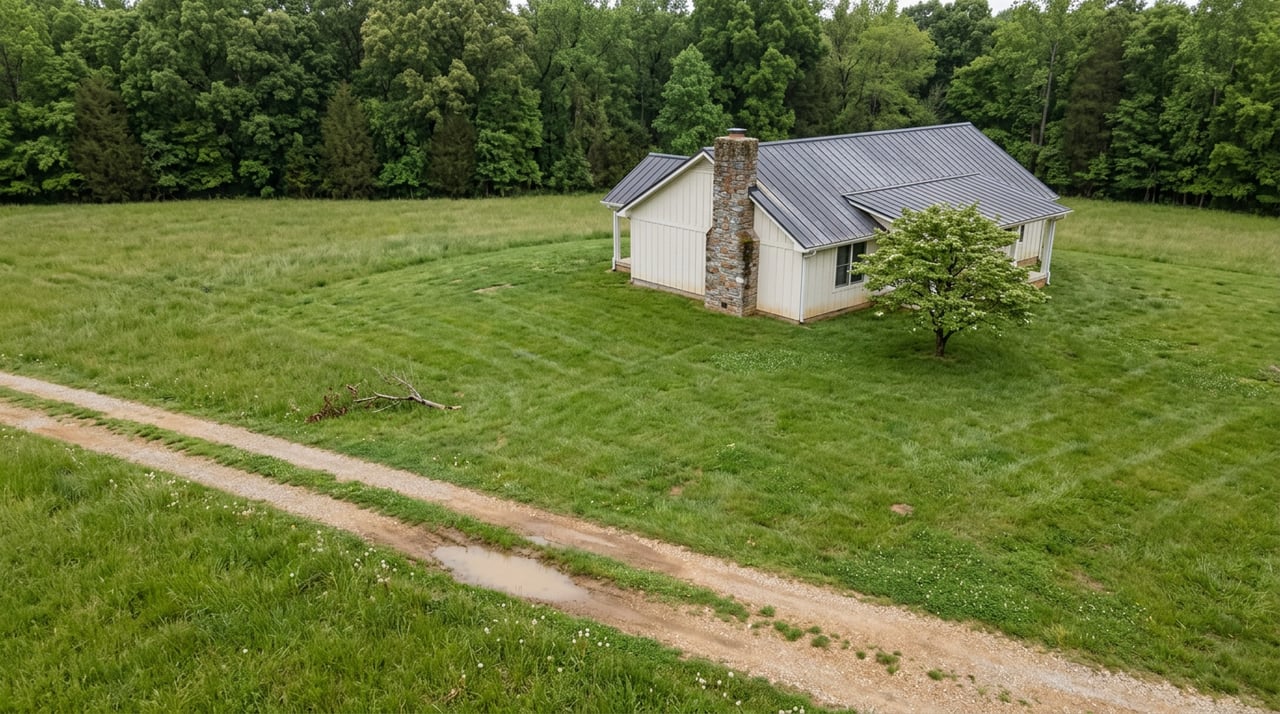
A buyer stood on a five-acre tract off Martling Road near Asbury last spring, looking at exactly what the listing promised: rolling pasture, a tree line at the back property corner, and a long view toward the ridges east of town. The agent pointed out the elevation, the road frontage, where a driveway could cut in. Neither of them said much about the low metal roofline about a quarter mile down the slope, half hidden by the tree line. It read as a barn. It was a broiler house.
That gap between what a buyer sees and what a buyer understands is where this post lives. Marshall County has a real, working poultry industry woven through its rural zip codes, and Alabama has two laws that interact in a way most out-of-area buyers never think to ask about until it is too late to matter. One law lets a seller stay quiet about a lot of things. The other protects an established farm from being sued over the very things a new neighbor might not have known to ask about. Understanding both, before you write an offer, is the difference between buying land with clear eyes and buying land with a surprise you can't undo.
Two Rules That Work Against Each Other
Nolo explains that Alabama is one of the small number of states that still follows caveat emptor for residential resale and has no state-mandated disclosure form a seller has to fill out and hand you before closing. Sellers carry no legal obligation to volunteer information you didn't think to ask for. That includes the existence of a working farm a half mile down the road.
Pair that with Alabama's right-to-farm statute, which shields agricultural operations that have been running for more than a year from nuisance lawsuits over the ordinary effects of farming, including odor, noise, and traffic tied to the operation, as long as the farm hasn't materially changed its practices or been negligent. The statute is on the books as Ala. Code § 6-5-127, and it exists to protect farmers from newcomers who move next door and then try to litigate the farm into changing.
Put those two rules next to each other and you get a specific kind of blind spot. A seller has no duty to tell you about the farm. The farm, once established, has strong legal cover to keep operating exactly as it has been. You end up owning the land and the view, and the operation two ridgelines over ends up owning the right to keep running.
The question worth asking before you fall in love with a lot on Sand Mountain isn't "can I live with this." It's "what does Alabama's right-to-farm law mean for this property?"
What This Actually Looks Like in Marshall County
This isn't a theoretical wrinkle. Commercial poultry is a genuine part of the rural economy around Albertville. Broiler and breeder operations sit on working land in the Asbury community and along roads like Kennamer Farm Road and Cagle Road, part of a Marshall County poultry economy built on contracts with integrators like Tyson Foods, Koch Foods, and the Pilgrim's Pride complex in Guntersville. These are multi-house operations, often four to eight barns per farm, built for a production cycle that runs continuously.
At the same time, rural acreage in these same corridors is actively being marketed to homesite buyers right now, cut into one-, two-, and five-acre tracts that emphasize privacy, mountain views, and country living. That's not a contradiction. Farmland and homesite land sit side by side across most of Sand Mountain, and they always have. The issue isn't that agriculture and residential buyers share the landscape. It's that a buyer touring a quiet lot in March may not be standing there on the day wind direction, ventilation cycles, or truck traffic make the operation next door obvious.
The One-Year Clock That Matters More Than the Listing Price
The right-to-farm protection isn't automatic from day one. A farm has to be established and operating for more than a year before the statute's nuisance shield fully applies. That detail cuts two ways depending on which side of the timeline you're on.
If you're buying next to a farm that has been running for years, the legal ground is settled. If you're buying near open agricultural land where no operation currently exists, the opposite risk applies. A new poultry operation could go up on adjacent land after your closing, run for a year, and then enjoy the same protection. Either direction, the lesson is the same: the right time to think about this is before you sign a contract, not after you've lived there long enough to notice a pattern in the wind.
Questions to Ask Before You Write an Offer
A few minutes of due diligence up front does more than any inspection contingency after the fact:
- Drive the property at more than one time of day, ideally including early morning, when ventilation fans and feed trucks are most active on working farms.
- Ask the seller directly whether they're aware of any agricultural operations within sight or downwind of the property.
- Pull up aerial or satellite imagery of the surrounding quarter mile. Long, narrow metal-roofed structures in clusters are a reliable tell for poultry housing, distinct from the shape of typical barns or equipment sheds.
- Check with the county on current zoning for adjacent parcels.
- Talk to a neighbor or two if the opportunity presents itself. People who already live on the road usually know exactly which direction the smell comes from and how often.
What Sellers and Agents Still Owe You
None of this means Alabama's caveat emptor rule leaves buyers unprotected. Listing agents also carry a separate duty under Alabama license law to disclose known material defects that would matter to a reasonable buyer, which is one more reason a buyer's agent who works this specific corridor and knows where the working farms actually sit is worth more than a generic search filter. On rural acreage where the land itself, not just the structure, carries the real story, skipping an inspection is a bigger gamble than it would be on a standard in-town lot.
Quick Questions
Does this only apply to large commercial poultry farms, or backyard flocks too? The right-to-farm statute is built around agricultural operations, which generally means working farms rather than a neighbor's small backyard coop. Backyard poultry is typically governed by local city and county ordinances instead, and those rules vary from one Alabama municipality to the next.
Does being near a working farm mean the land is a bad investment? Not at all. Plenty of buyers on Sand Mountain want exactly this kind of setting, and agricultural land use has coexisted with rural homesites here for generations. The point isn't to avoid these tracts. It's to walk into the purchase knowing what you're buying and what recourse you will or won't have later.
Rural land around Albertville rewards buyers who do their homework before they fall for the view. If you're looking at acreage on Sand Mountain and want someone who knows exactly which roads have working farms nearby and which questions to ask before you're under contract, Trenten Hammond can walk the land with you and help you buy with your eyes open. Let's Connect.
This article is general information, not legal, tax or financial advice. Consult a qualified professional about your situation.